

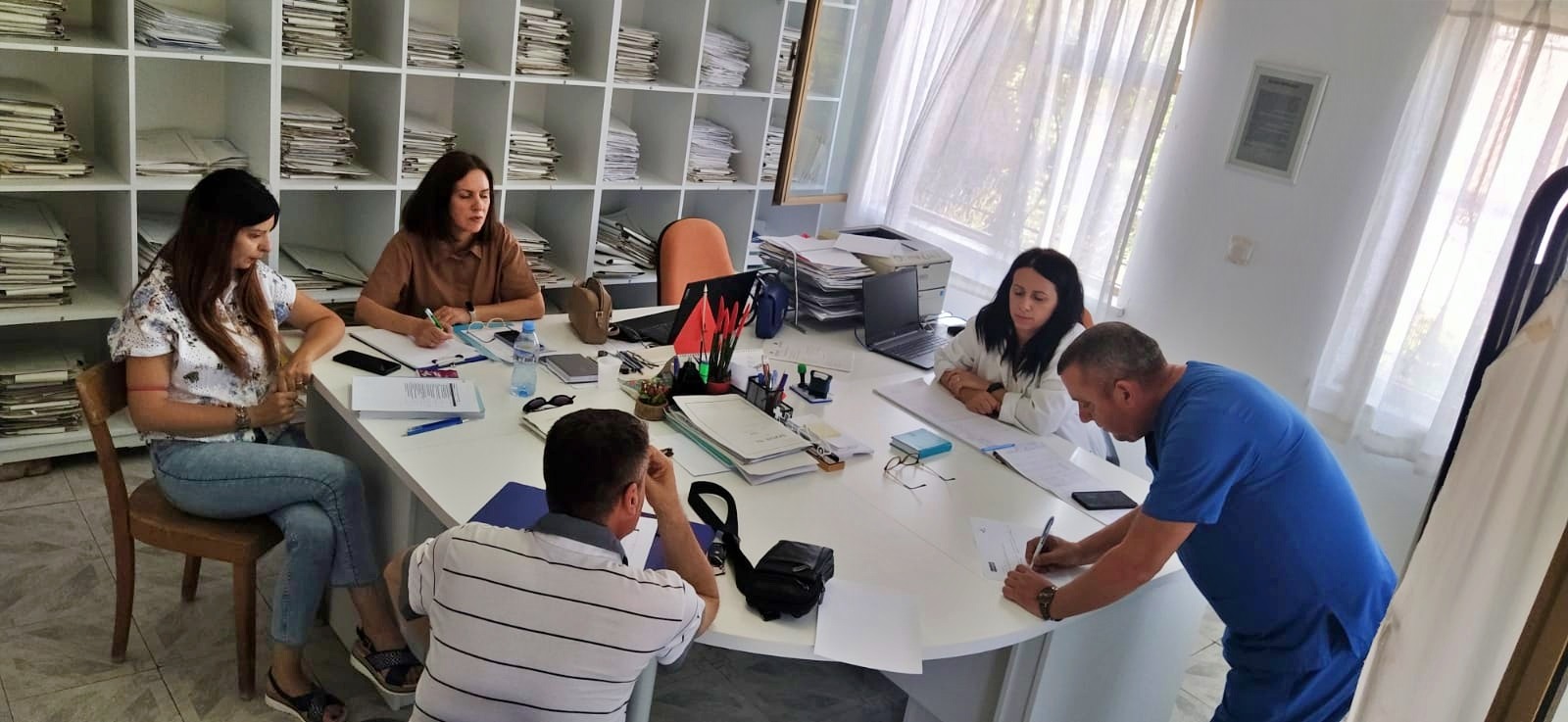
The Health for All Project (HAP) has successfully completed the mentorship programme for supportive monitoring for the implementation of home care services, contributing to strengthened monitoring capacities within the Local Units of Health Care (LUHCs) and to improved quality of services in primary health care.
Between April and July 2026, HAP, in collaboration with Ryder Albania, conducted 35 supportive supervision visits to health centres across the regions of Tirana, Durrës, Kavaja, Berat, Shkodër, Elbasan, Lushnja and Dibër. The process was supported by experienced consultants who provided hands-on mentoring to monitoring teams throughout all stages of the supervision process, including visit preparation, field implementation and the preparation of final monitoring reports.
The supportive monitoring process was carried out using standardised monitoring tools officially approved for assessing the implementation of home care services. Beyond identifying implementation challenges, the process focused on providing practical guidance to support continuous quality improvement.
The findings indicate that health centres have established functional structures for delivering home care services and that health professionals demonstrate strong commitment to providing care for patients in their homes. At the same time, the supervision process identified several areas requiring further attention, including tailoring nursing interventions to patients’ individual needs, optimising the use of medical equipment, improving the completeness of nursing documentation, and strengthening collaboration with social services to better address patients’ complex needs.
At the conclusion of the process, a set of practical recommendations was developed for health centre managers and regional health care authorities. These recommendations focus on strengthening internal monitoring mechanisms, supporting the continuous professional development of health personnel, improving documentation practices, and further enhancing the quality of home care services.
This process marks an important step towards strengthening quality assurance mechanisms and providing continuous support to health care providers, ultimately contributing to more effective, standardised and patient-centred health care services.