
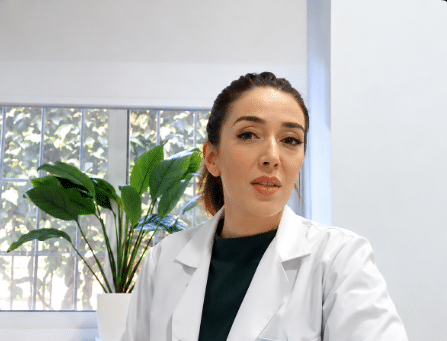
Over the past twelve years, Primary Health Care (PHC) in Albania has undergone changes in service organisation, professional development, and patient care practices. In this interview, Dr. Melsena Leknikaj, a family doctor at Socio-Health Centre No. 8 in Tirana, shares her experience of changes in clinical practice, HAP’s contribution, and the challenges that remain for the future.
1. If you compare the care provided at your Health Centre 10–12 years ago with the care provided today, what is the most significant change in service quality?
The most significant change has been the gradual shift from care focused primarily on the acute problem that brought the patient to the Health Centre towards a more planned, structured, and prevention-oriented approach.
Today, we look beyond symptoms to consider patients’ medical history, risk factors, lifestyle, and need for long-term follow-up. For patients with chronic diseases, check-ups are scheduled according to their clinical condition and documented more systematically. This helps us identify problems earlier, adjust treatment, and ensure continuity of care.
Thanks to the extensive training supported by HAP, the need for referrals to specialists has decreased. Similarly, continuous patient follow-up helps reduce the burden on tertiary care services, contributing to improvements in the health care system as a whole.
2. What difference have clinical protocols made in the management of non-communicable diseases? Could you share a concrete example from your practice?
Clinical protocols have helped us standardise the assessment, treatment, and follow-up of patients with hypertension, diabetes, asthma, COPD, and dyslipidaemia. They provide a common, evidence-based framework for clinical decision-making and guide us in determining when specialist consultation is necessary.
A particularly meaningful example is the management of dyslipidaemia. Previously, these patients were primarily diagnosed and followed up by cardiologists. Today, thanks to the knowledge gained through HAP-supported training and Peer Groups, we as family doctors can diagnose, treat, and monitor these patients according to the relevant clinical protocols.
In just one year, I diagnosed more than 400 patients with dyslipidaemia, who are now regularly monitored in accordance with the protocol. This change is particularly important for identifying and managing cardiovascular risk factors and strengthening the role of family doctors in caring for patients with chronic diseases.
3. How has continuity of care changed, and how are patients more actively involved in managing their health?
Today, we try to ensure that patient follow-up, particularly for those with chronic diseases, does not depend solely on whether they visit the Health Centre on their own initiative. We schedule regular check-ups, monitor clinical parameters, and reassess treatment according to disease progression. Documenting consultations helps us track patients’ progress and make more appropriate clinical decisions.
At the same time, we place greater emphasis on health education. Patients need to understand not only what treatment they are receiving, but also why it is necessary, how they can prevent complications, and what role they themselves play in managing their condition. We see improvements when patients return for scheduled check-ups and when we can identify the need for intervention in a timely manner.
Nevertheless, continuity of care remains a challenge, as not all patients are able to attend their recommended follow-up appointments regularly.
4. What role do doctor–nurse collaboration and home-based care play in improving services today?
Quality care requires teamwork and a clear division of responsibilities. Nurses contribute to monitoring vital signs, providing health education, following up with patients, and identifying problems that require medical assessment. This collaboration gives us a more complete picture of patients’ conditions and helps us coordinate care more effectively.
Another important development is home-based care, particularly for older people and patients with limited mobility. Home visits enable us to monitor patients’ clinical conditions, assess their living circumstances, and work with family members.
The main benefit is that patients do not lose access to follow-up care simply because they cannot travel to the Health Centre. Home visits also allow us to identify needs that might not be as apparent during a routine consultation.
5. Has the way patients’ psychological and social needs are identified and addressed changed?
Yes. Today, we are more aware that patients’ health is also influenced by psychological, economic, social, and family circumstances.
For example, a patient with diabetes may struggle to follow treatment because of financial difficulties, stress, or a lack of family support. We therefore try to understand the barriers patients face and adapt our counselling to their actual circumstances.
Collaboration with psychologists and social workers helps us respond more effectively to these needs. Rather than judging patients solely on whether they follow medical recommendations, we seek to understand the reasons behind their behaviour. For patients, this means more compassionate, comprehensive, and individually tailored care.
6. Which of these changes do you directly associate with support from the Health for All Project?
From my perspective as a family doctor, HAP’s most important contributions have been in professional development, the use of clinical protocols, and the promotion of collaboration among health professionals.
Training and Peer Groups have given us opportunities to update our knowledge, discuss clinical cases, and apply what we learn in our daily practice. This has influenced how we assess patients, identify risk factors, and organise follow-up care.
Another important contribution has been strengthening teamwork, with doctors, nurses, psychologists, and social workers collaborating to better respond to patients’ needs.
Of course, improvements in service quality result from several factors, including the dedication of health professionals, institutional support, and the consistent application of good practices. HAP has made an important contribution to this process, particularly by strengthening professional capacities and promoting a culture of quality-oriented care.
7. Despite the progress made, what are the main challenges that continue to affect the quality of care?
One of the main challenges remains the heavy workload, which limits the time available for assessing, counselling, and following up with each patient.
Ensuring continuity of care is another challenge, particularly for patients with chronic diseases who face financial, geographical, or organisational barriers.
There is also a need to further strengthen human and material resources, improve documentation, and ensure better coordination between different levels of the health care system. For example, delays in accessing specialist consultations can affect patient follow-up.
To sustain the improvements achieved, we must continue investing in professional development and service organisation.
8. Which practices should continue after HAP ends, and what does quality Primary Health Care mean to you today?
I believe it is essential to preserve the practices that directly influence the quality and continuity of care.
First, continuing professional development and Peer Groups, because health professionals need opportunities to update their knowledge and exchange experiences. Second, the use of clinical guidelines and protocols, along with structured care documentation, as these help maintain standards and improve patient follow-up. Third, doctor–nurse collaboration, health education, and home-based care for patients who face difficulties accessing services.
It is important that these practices receive institutional support and become part of the routine organisation of PHC services.
For me, quality care today means more than accurate diagnosis and appropriate treatment, which were the main measures of quality ten or twelve years ago. Today, quality care also encompasses prevention, continuous follow-up, collaboration among professionals, and patient involvement in decision-making.
Ultimately, quality is measured not only by the number of consultations we provide, but by the value patients gain from them. A patient should not be merely a diagnosis we treat, but a person we care for continuously.