

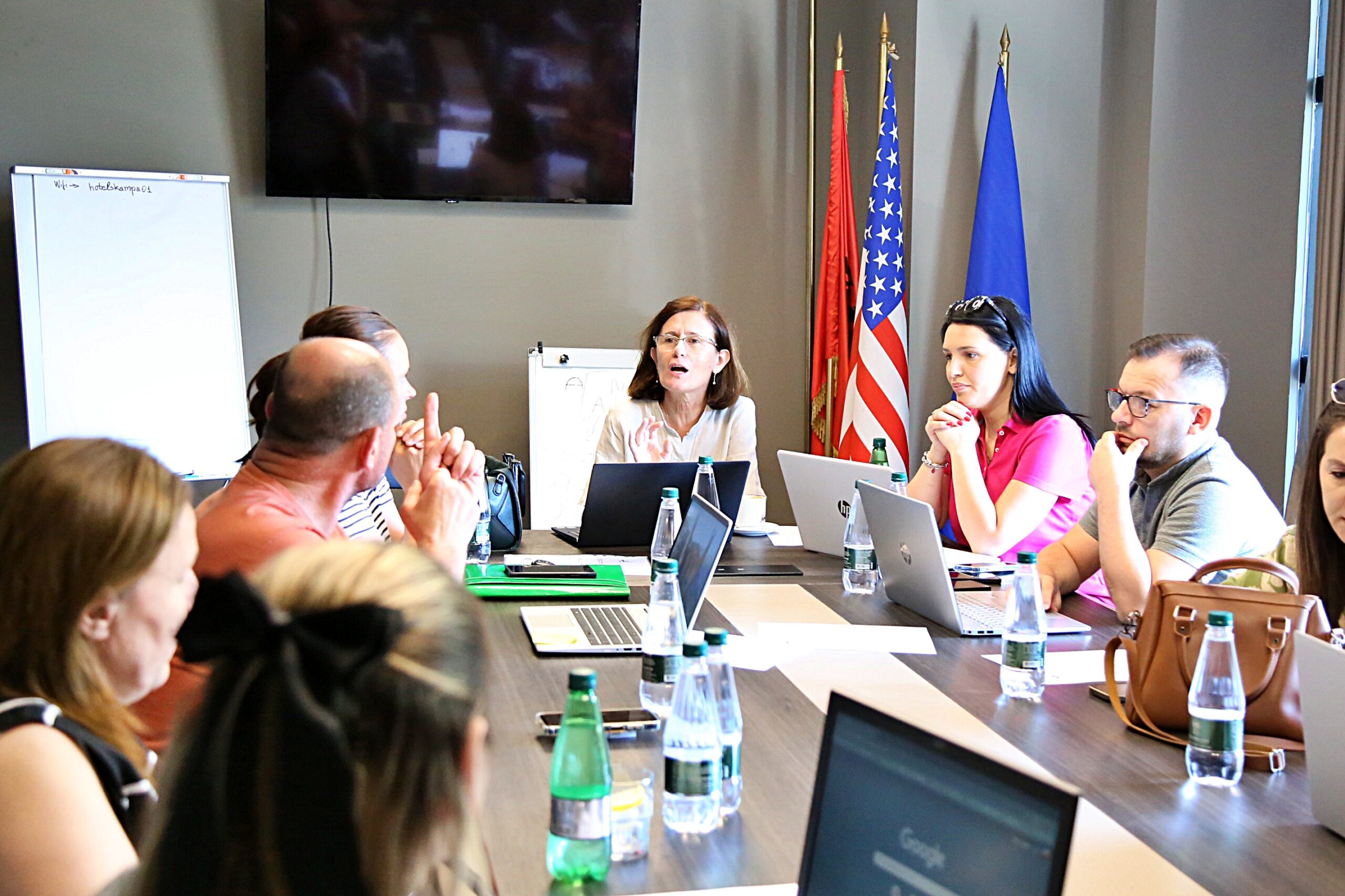
Arben Xhuveli is a family physician and Director of the Novoselë Health Centre in Vlora. He graduated as a General Practitioner from the University of Tirana in 1994 and has worked throughout his career in family medicine within primary health care.
Dr Xhuveli provides care to a population of 4,300 residents, while the Novoselë Health Centre under his leadership serves approximately 15,500 people. He has played a significant role as a facilitator in establishing and operationalising the Health Centre’s Peer Groups.
- Peer Groups’ impact on professional confidence in the implementation of NCD protocols
“The knowledge and tools gained through Peer Group meetings are used daily in practice, and the results are tangible.”
Dr Xhuveli: Participation in Peer Groups has had a direct impact on strengthening professional confidence in implementing clinical guidelines for non-communicable diseases (NCDs). The updated knowledge and practical approaches discussed within these groups have improved clinical decision-making and standardised patient follow-up procedures.
A concrete example is the use of the home blood pressure monitoring calendar. Patients are instructed by the nurse on how to use it, and the majority complete it consistently, taking an active role in monitoring their own health. This supports health staff in establishing accurate diagnoses and initiating protocol-based treatment.
- Role of PGs in reducing professional isolation
“Regular meetings create space for experience-sharing and increase confidence in clinical decision-making.”
Dr Xhuveli: Practice in primary health care is often accompanied by a sense of professional isolation. Peer Groups help mitigate this by creating a supportive environment where physicians and nurses share cases, challenges, and practical solutions.
Particularly important is the strengthening of the family doctor–family nurse team, which has enhanced collaboration and professional belonging, with a positive impact on service quality.
- PGs’ administrative burden vs. professional value
“Administrative workload has an impact, but the professional value of Peer Groups remains motivating.”
Dr Xhuveli: The facilitator role requires preparation and sustained commitment. Administrative workload frequently limits the time and energy available for this responsibility. However, the professional benefits and the direct impact on improving health services compensate for these challenges.
- Reimbursement scheme as a barrier to protocol implementation
“Updated knowledge is not always matched by real implementation opportunities.”
Dr Xhuveli: The Health Insurance Fund reimbursement scheme directly affects the practical implementation of clinical protocols. In some cases, financial limitations related to specific diagnostic tests or medicines hinder full implementation of recommendations discussed in Peer Groups, despite updated knowledge.
- Current operational challenges
“The process has started — that is what matters most; improvement will come gradually.”
Dr Xhuveli: Limited time, administrative workload, and logistical constraints remain the main operational challenges. In addition, the absence of a structured mechanism to monitor and evaluate the implementation of recommendations reduces their practical impact in primary health care.
However, as this is still a relatively new experience, such challenges are expected. Staff need time to adapt and to build a sustainable working tradition.
- The continuous training of facilitators as a necessity
“If Peer Groups are to become a tradition, investment in facilitators is essential.”
Dr Xhuveli: Continuous training for facilitators is crucial to improve the quality, structure, and effectiveness of Peer Group meetings. The aim is to institutionalise Peer Groups and establish them as a sustainable practice within the Health Centre.
- Recognition and accreditation of professional engagement
“Genuine engagement is not always proportionally reflected in the current accreditation system.”
Dr Xhuveli: The continuing professional development credit system is useful, but it does not always correspond to the time and commitment required for active participation in Peer Groups. A review of this system would be appropriate.
- What increases motivation for active participation?
“These meetings build not only knowledge, but also a culture of collaboration.”
Dr Xhuveli: More practical organisation of meetings, institutional recognition of engagement, and direct linkage to real clinical practice needs would increase regular participation.
Peer Groups contribute to something essential: fostering a more collaborative and collegial atmosphere among colleagues — a key factor in the effective functioning of the Health Centre.